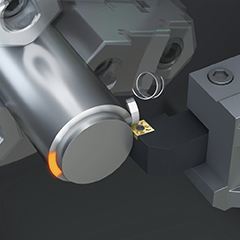
As the automotive industry increases its use of aluminum to help improve fuel efficiency, FSW offers many potential benefits. In contrast to most other joining processes, FSW handles the variations inherent in high-volume production while simultaneously providing improved mechanical properties. The process delivers distinct benefits and cost savings superior those of other welding alternatives.
With pressure to development greener, more fuel-efficient vehicles capable of meeting increasingly strict fuel economy standards, automotive manufacturers must engineer lighter, more efficient car bodies. FSW allows these manufacturers to easily avoid problems such as the porosity in casting assemblies, which creates significant scrap due to frequent defects. Instead, FSW passes through affected areas to resolve defects and improve material properties with a more refined gain. Joining thinner high-strength automotive steels, aluminum and magnesium alloys, automakers can reduce weights far below what was once thought possible.